
Back
|
Back
|
| FED 3, 35mm Rangefinder Camera, Image Gallery |
|
Given this FED 3s dismantling and long journey to the collection, the first test film was a joy. In use the FED 3 shows considerable refinement from earlier models. The film advance is incredibly light and silky smooth whilst the shutter release is similarly made. These alone make this FED 3 a delight to use. The first film is just to make sure the functions are about right. The second curtain is running slightly slow possibly, but the rangefinder is spot on and lens is clear and crisp. It's often claimed that Russian lenses are excellent and it would be hard to level any criticism at this FED lens, at f8 the sharpness of the lens was impressive, out-resolving the scanner by a long way. The individual locking wire strands on the Yakalov propeller below left are beautifully resolved on the original - and it's already cropped. |
 |
 |

|
 |
The throttle and engine control quadrant of this Antonov AN-2 biplane seemed an appropriate subject for this old Soviet camera, a little blue haze as the sunlight was reflecting off something into the lens. A similarly appropriate contemporary with the FED 3 is this MIG 15, although this one is not some long ago snapped image on a Soviet airfield, but an image taken at RNAS Yeovilton in July 2017. I like this FED a lot, they are relatively cheap, so seek one out! |
 |
The pretty little village of Stoke Charity in Hampshire, UK. A regular route when the opportunity to cycle or motorcycle out this way present themselves. Here the FED 3s shutter curtain issue is quite obvious. The first curtain is either a little too quick off of the start or the second curtain is a tad slow. I think the First curtain is out accelerating the second, so I will back a turn off the spring next time I have a chance. |
 |
The picturesque village of Milton Abbas in Dorset owes it's existence to the whim of Joseph Damer, the first Earl of Dorchester. In the 1770s, offended that the village of Middleton was ruining his view from his home at Milton Abbey, elected to remove it from the landscape - such was the way of the landed British gentry. This was fairly common practice and became known as emparking. The creation of parks. As Middleton was going to be demolished a new village was needed, Damer charged the architect Sir William Chambers as well as the famous landscape gardener Capability Brown with task of designing it. It would have resulted in considerable social change and upheaval, however, the new village was considerably smaller, being primarily intended for the farm workers on whom the landowner was dependent. It seems emparkment wasn't just about appearance, it was also about maintaining power. The resulting village consists largely of identical thatched cottages set along a single lane nestling amongst a wooded valley. Benefitting enormously both from the beauty of its natural surroundings as well as the power of geometric repetition. This row of almshouses were originally built in 1674 in the doomed Middleton, but were dismantled and rebuilt in Milton Abbas, where they were photographed by the FED 3 in October 2017. Beautiful as it is, Milton Abbas is cursed by the 20th century with cars prominently parked all along its single lane, so this image was squeezed between them and a builder's van. |
 |
Joseph Damer's home, in the park landscape he created back in the late 1700s. These day's it's a school for the well healed. Certainly a bit better looking than the Secondary Comprehensive I attended a few miles down the road. The Autumn colours were a bit late in 2017, this was taken in October, and the leaves are getting the hint, but haven't really committed themselves. Time flies, hard to believe a full year has gone since the FED 3 had it's first test film. |
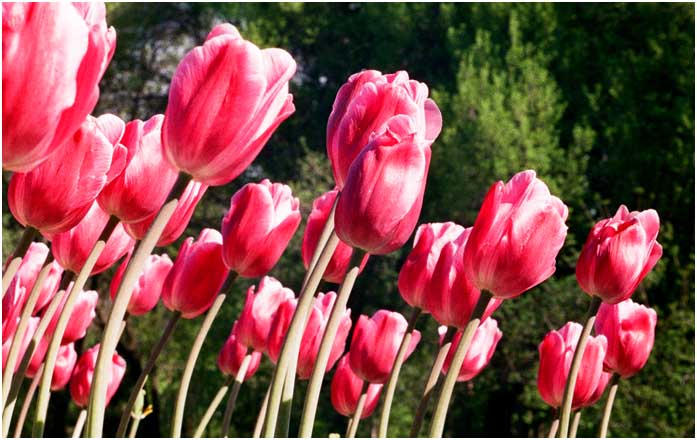 |
Tulips blossom in their thousands along the streets of Almaty, Kazakhstan. This image and the few that follow were taken during a trip to the region to get a feel for the place prior to my move later in the year. |
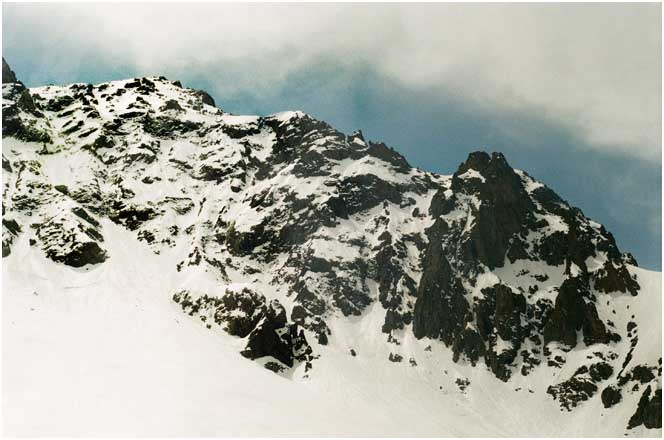 |
All year round the snow capped peaks of Zailiski Alatau mountain range are visible to the south, beyond which lies the land of Kyrgyzstan. |
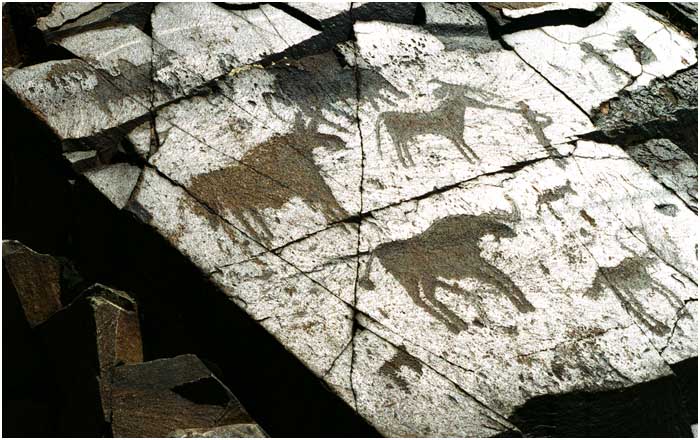 |
Within this region where formerly borders didn't exist as we know today, the tribes people would carve these 'petroglyphs' into the hard igneous rocks, where they remain to this day. Scattered far and wide, but sometimes there are hundreds in important locations. One such is a couple of hours drive from Almaty where over 300 are located. Getting the sun to reflect of the facetted surface of the rock reveals them for the FED 3 here. |
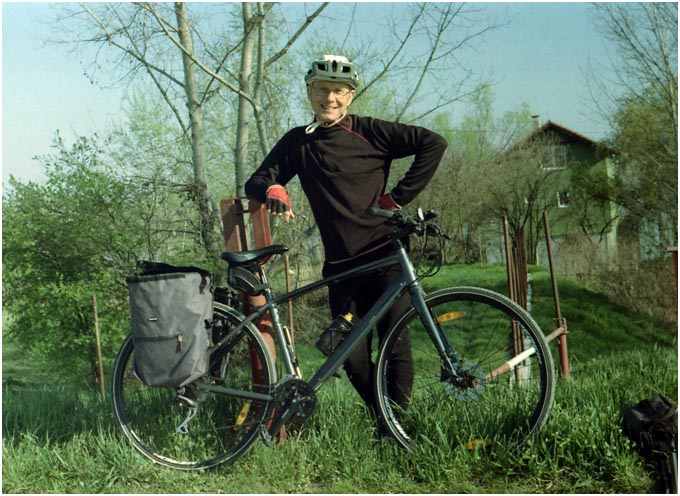 |
An excuse to use the FED's self timer. Me and the Merida I acquired in Kyiv, Ukraine in 2020. I'd explored much of Kyiv area on this cycle prior to Putin's invasion and subsequently had this bicycle plus the rest of my belongings shipped to Belgrade, Serbia in July 2023. This image was taken in early 2024 as spring was blossoming in Serbia, atop the flood defences on the North side of the Sava river during a 45km ride out of town. The delayed release function is a feature I rarely get to use, but on this occasion there was a convenient fence post to perch the FED on. The drunken verticals are retained in this uncropped image. |
 |
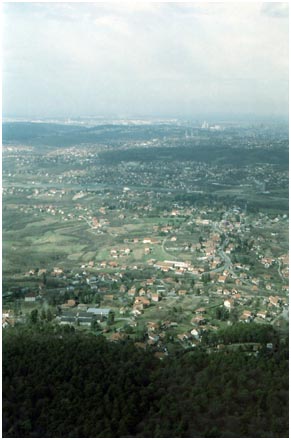 |
Belgrade is rather more hilly than I expected, after my initial rides back in July 2023 I decided to modify the Merida. It started out life as an Merida Urban Crossway, but I've changed the chainset to something more suitable for the local hills. One ride I wanted to do was out to Avala TV tower. The last two miles up to the tower itself is quite a challenge taking me and my arthritic knees 37 minutes to ascend, the return taking an altogether more entertaining 7 minutes. The tower itself is a rebuild of an earlier tower that was destroyed by NATO during the Balkan wars, in April 1999. The original had been completed in 1965, broadly contemporary with the FED 3 camera that took these images. This reconstruction closely honours the original and was completed in 2009. A lift takes you up to the observation deck where the right hand image was taken from, showing the view back to Belgrade 12 miles in the distance. |
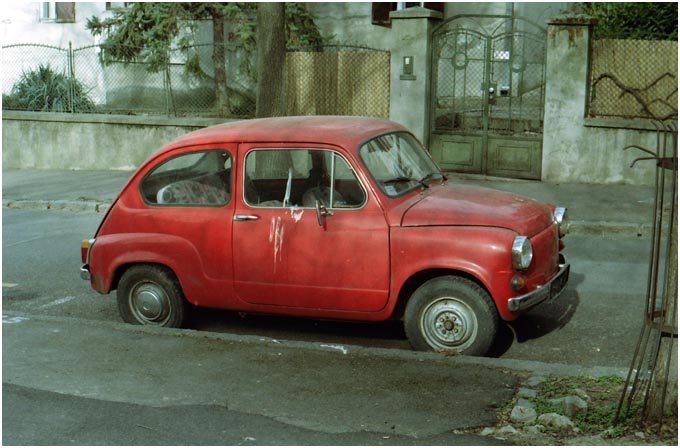 |
In the Suburb of Vracar within Belgrade resides this cute but rather sad little Zastava 750 "Fica". I walk by it most days when living there. I've never seen it move, in winter the leaves build up around it and in spring it gets plastered in bird droppings, to be gradually eroded by the rains. But someone keeps the tyres inflated and the tax disc is always up to date. The Little Fica was a locally produced adaptation of the Fiat 600 made from 1955 up to 1985 and so makes a suitable subject for the FED 3. The batch of Kodak film in conjunction with the processing has produced a distinctly period colour to the images taken in Serbia. The FED's lens is pretty good, resolving the wire fencing in the background clearly despite not being the focus point at an aperture of f/8. |
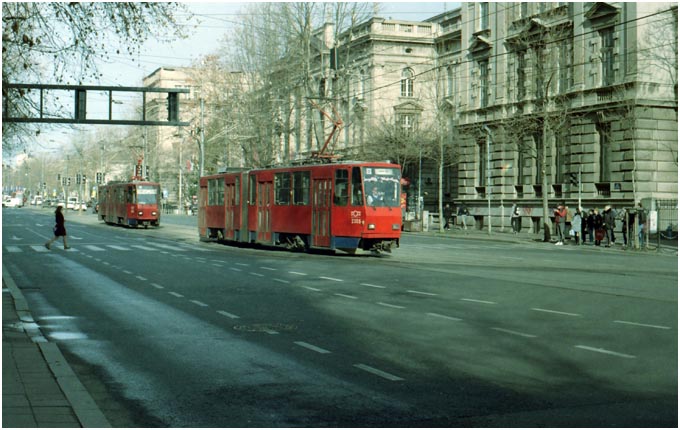 |
An elderly and rather battered tram runs past the University of Belgrade School of Electrical Engineering. The street looks disarmingly quiet but having cycled it on many occasions, it's often a bit of a war zone. I like the FED 3 a lot, it handles nicely and I hope I've honoured the original Russian donor who handed it to me in Irkusk, Siberia back in 2016. Since rebuilding it it's travelled to Kazakhstan, Uzbekistan, Kyrgyzstan, Serbia, Austria, Belgium and UK. It's never let me down. |
 |
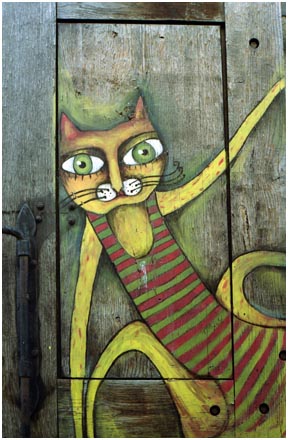 |
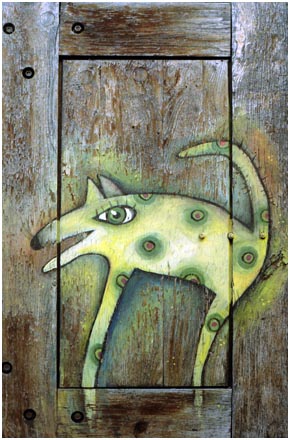
A change of location to Salzburg in Austria where these two delightfully painted window shutters proved an irresistible opportunity to test the FED's rangefinder. The Rangefinder is quick and easy to use with the secondary image being easily seen and the focus action smooth. The rangefinder base is long enough for critical focus with low depth of field situations like this. |
 |
|
|
 |
||

|
 |
© Living Image Vintage Camera Museum 2000-2026

